Visiting Iran: Shiraz, part 1
If you are learning Farsi or planning to do so, you may consider visiting Iran. There are many beautiful places to see. Of course, even if you don’t speak Persian you will be fine, as in all touristic places people speak English. Every few weeks I will describe tourist attractions of different cities.
I will start this series with my hometown, Shiraz. Not because I really love that place (although I do!) but because Shiraz is genuinely one of the most beautiful cities. Historically it is known as the city of flowers and nightingales (شهر گل و بلبل), of love and Persian poetry, and home to countless sites such as the tombs of Hafez (14th century) and Saadi (13th century). The city is dotted with old and glorious gardens—here are five of my favourites.
Eram Garden
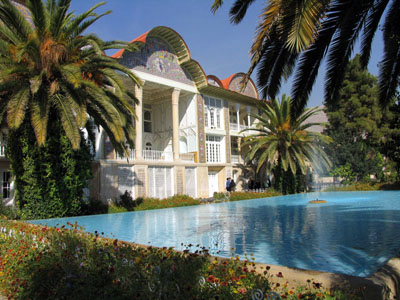
The Eram Garden (Garden of Paradise) is a textbook example of a Persian garden, with waterways leading towards the historic Qavam house. Since the 1979 revolution the garden has belonged to Shiraz Agriculture University—and they take great care of it. Every season brings different flowers and trees, but the best time to visit is spring, when everything is in bloom.
Afif-Abad Garden

The garden was built in 1863 during the Safavid period and was a leisure retreat for Safavid shahs and the Ghavam family. It now functions as a weapons museum that is open to the public. In spring the scent of bitter orange blossoms fills every path. I used to live close by when I was a teenager; in late May and early June the garden felt like paradise as my mum, sister, and I walked through the flowers. I never enjoyed the museum in the middle, but for reasons unknown it is very popular with male tourists.
Delgosha Garden
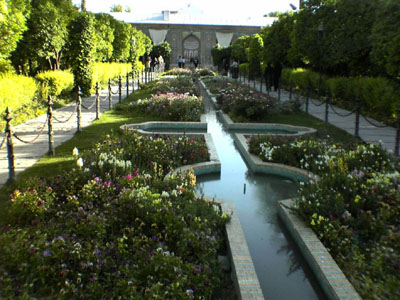
Delgosha literally means “heart opener.” In Farsi when we are upset we say “Delam gerefte” (my heart is closed), so you can guess what heart opener hints at—feeling cheerful again. The garden dates back to the Sassanian Empire, although several buildings were added during the Qajar dynasty. Covering roughly 7.5 hectares, it is full of citrus trees—especially oranges and sour oranges—and the Sa’di Tomb canal flows right through it. With its refreshing water channels and unique trees, it is impossible to leave Delgosha without feeling brighter.
Naranjistan Garden

The name combines naranj (sour orange) and -estan (place), so it literally means “place of sour orange trees.” Naranjistan is a traditional Persian house with an exquisite garden that is now open to the public. Built in 1886 during the Qajar era (Zand influences remain), the house showcases the lifestyle of upper-class families in the 19th century, complete with ceilings inspired by Victorian Europe. Alongside Eram, it also serves as one of Shiraz’s botanical gardens.
Jahan Nama Garden
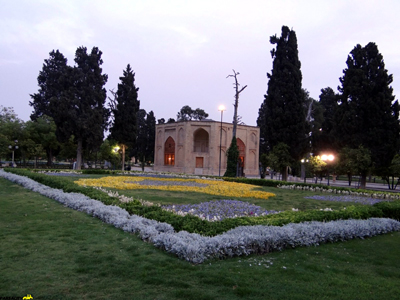
Jahan means “world” and nama means “facing,” so the name suggests “facing the world.” Although the garden opened to the public only recently, experts believe it is one of the oldest in Shiraz. It is particularly beautiful at night, and the octagonal pavilion in the centre now functions as a small museum with historic photos of the city—definitely worth a visit.